How to successfully introduce empAI
Digitalising energy management doesn't have to be a complex large-scale IT project. From the initial analysis and a two- to three-month pilot phase to ongoing operation: this is how empAI is integrated step by step into existing structures – flexibly, with no minimum term and in line with your own IT and security architecture.
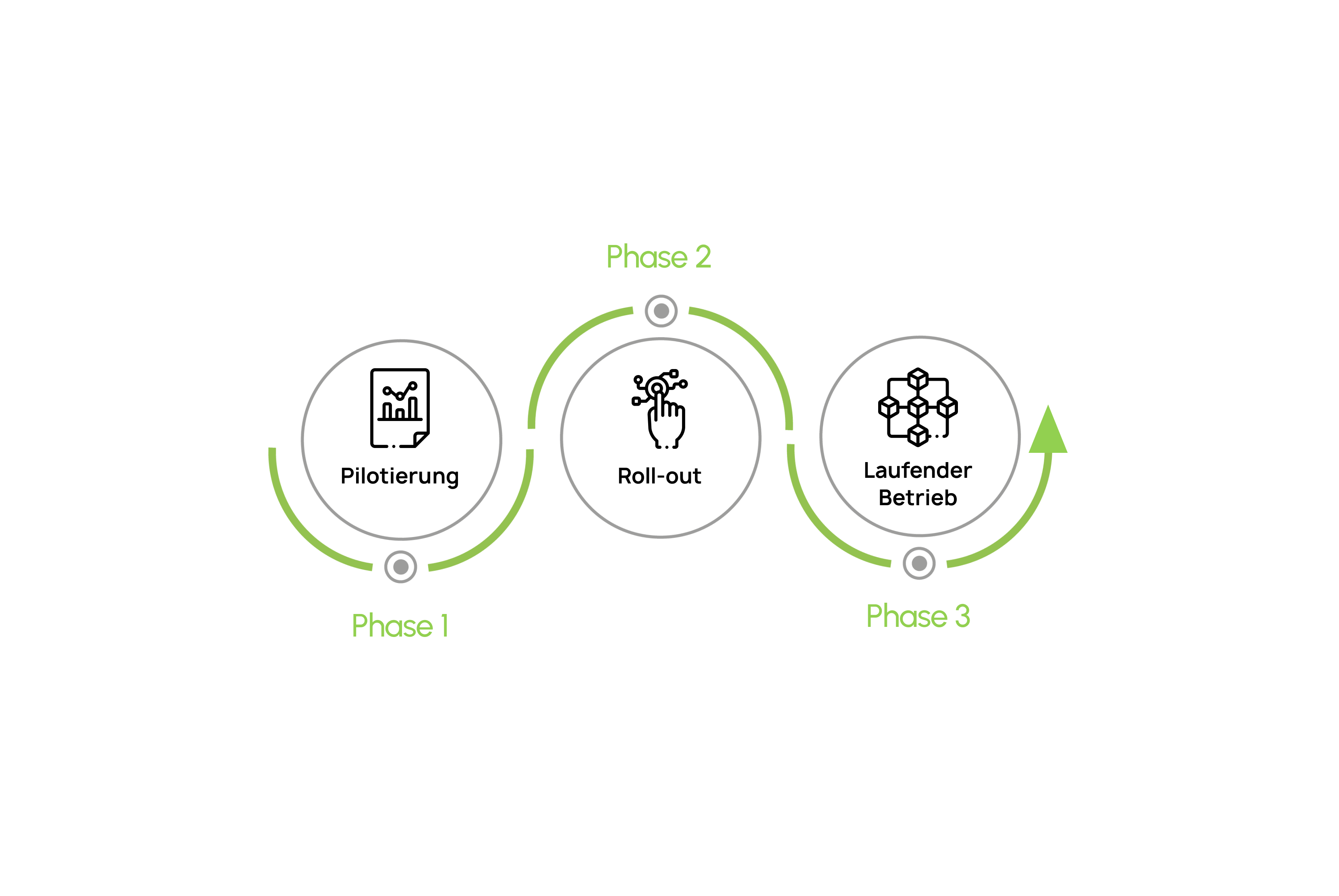
How to successfully introduce empAI: from the initial analysis to ongoing operation
For many companies, digitalising energy management initially sounds like a complex IT project: numerous interfaces, high internal effort and the worry of disrupting existing processes.
empAI is deliberately designed differently. As a platform for energy data management, the solution is integrated step by step into existing structures – not as a one-off large-scale project, but as a structured path with clearly defined phases. Companies gain initial insights early on, can plan the expansion in a targeted way and extend usage at their own pace.
Getting started with energy data management doesn't have to be a lengthy transformation project. What matters is a structured approach that quickly creates value and grows with the company.
Initialisation: understand the starting point, define the value
The starting point is not technical integration, but an understanding of the individual situation. An initial analysis of energy consumption provides an overview of the available data and potential optimisation opportunities. Together, the most important goals are defined: is the focus, for example, on reducing energy costs, avoiding load peaks, better energy planning or improving CO₂ reporting? On this basis, a clear roadmap for introducing empAI is created.
Phase 1 – Pilot (2 to 3 months)
In the pilot phase, the first data sources are connected and analysed. empAI creates digital twins of the relevant energy and production areas and links them with external influencing factors such as weather or market data. Based on this data, empAI's AI models learn the individual consumption behaviour and forecast energy demand. Analysing the existing data reveals initial relationships and identifies concrete optimisation potential. Companies thus obtain a sound basis for deciding on the next steps after only a short time.
Phase 2 – Roll-out (6 to 12 months)
During the roll-out, the data foundation is gradually expanded. Further metering systems, sensors and relevant company data are integrated, creating an increasingly complete picture of the energy landscape. The information gained is made usable in the form of dashboards and key performance indicators. This creates a shared data foundation for energy procurement, production, controlling and sustainability management. Energy consumption, cost developments and optimisation measures can be continuously assessed and further developed in a targeted way.
Phase 3 – Ongoing operation
After the introduction, empAI continues to run as a software-as-a-service platform and supports companies on an ongoing basis in optimising their energy use. Operation requires no extensive investment in in-house IT infrastructure and includes continuous development, support and security standards. The platform continuously monitors relevant data and helps companies identify new savings potential and implement measures.
There is no minimum term: empAI can be adjusted at any time and grows flexibly with the company's requirements.
Technically aligned with your existing IT and security architecture
Every company has individual requirements for IT, data protection and infrastructure. The platform can be operated in the cloud in a German cloud environment, within your own infrastructure or in hybrid scenarios. For particularly high security requirements, fully isolated operating models are also possible.
Regardless of the chosen model, key security standards are the focus: GDPR compliance, end-to-end encryption, audit logging and high IT security requirements.
Conclusion: step by step to better energy data management
Introducing empAI is not a one-off large-scale project, but a structured process: from analysing the starting point and an initial pilot phase to fully integrated operation. Companies gain initial insights quickly, expand usage step by step and retain full control over their data and processes.
With empAI, companies get a central platform for energy data management that connects energy, production and environmental data and creates the basis for better decisions – today and with a view to future requirements.