Energy data management in the glass industry
Energy data management in the glass industry: where there is room for manoeuvre beside the melting furnace
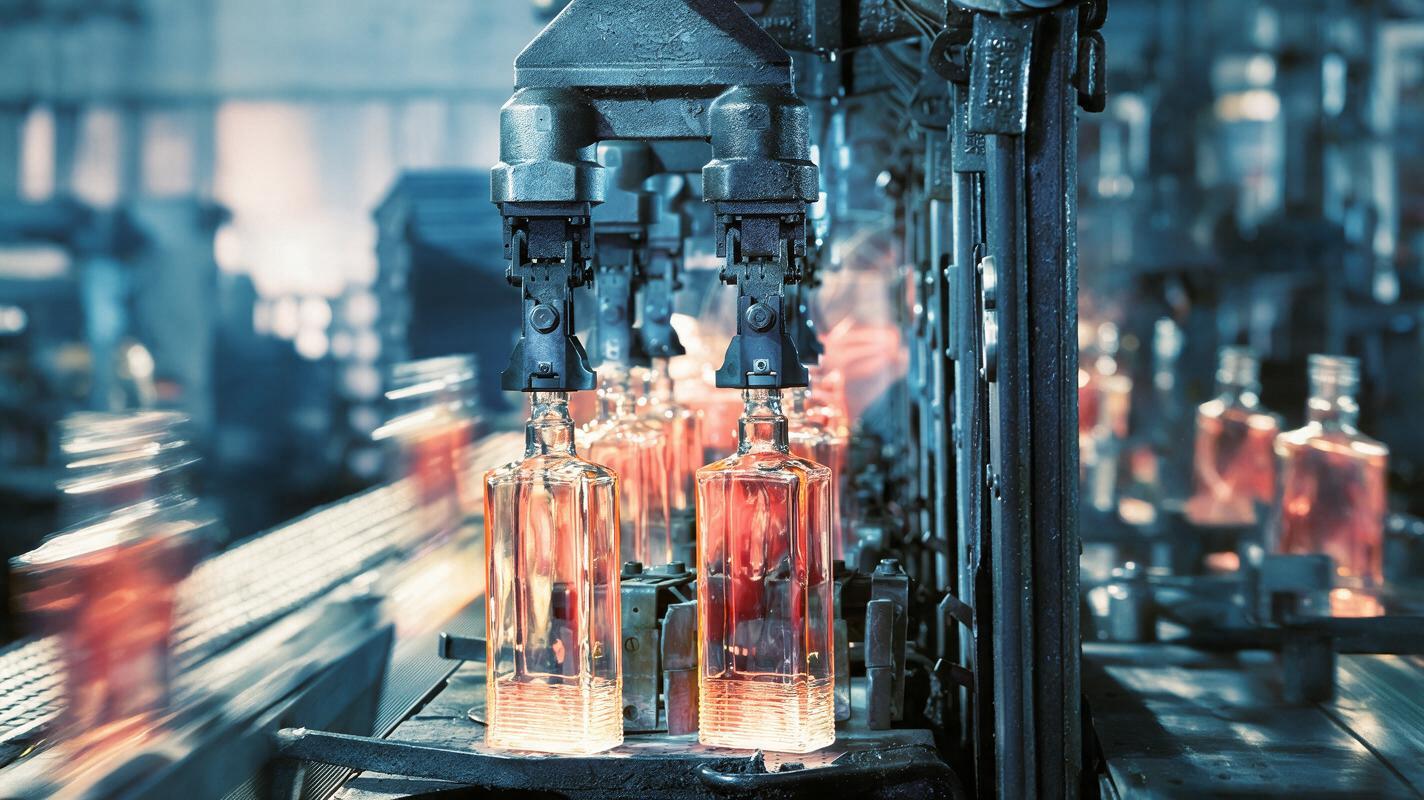
Glass furnaces run at temperatures of around 1,400 to 1,600 degrees Celsius – for periods of ten to 15 years without interruption. The furnaces must not stand still for a single moment: if a melting tank cools down, the glass hardens and the plant would largely have to be rebuilt. The core process of glass production therefore follows the fixed rhythm set by the furnace.
High energy demand and rising costs
According to the German Federal Statistical Office, the glass and ceramics sector ranked fourth among the most energy-intensive industrial sectors in Germany in 2021. 7.4% of total industrial energy consumption was used to produce glass and ceramics. In addition, higher energy and raw material prices made glass products significantly more expensive in January 2023 compared with the same month of the previous year.
The furnace sets the pace, and price developments on the energy market have hardly any influence on it. This is due to technical reasons and is part of the industry's reality.
The room for manoeuvre lies around the furnace
Alongside the continuous core process, there are usually numerous auxiliary processes: cooling, forming, finishing and logistics. For these consumers, energy use can be adjusted in time depending on the plant, while the furnace keeps running at a constant level.
How much room for manoeuvre actually exists differs from site to site. Which consumer needs how much energy and when, and which loads can actually be shifted? These questions can be answered at plant and process level, with a reliable data foundation.
How empAI helps
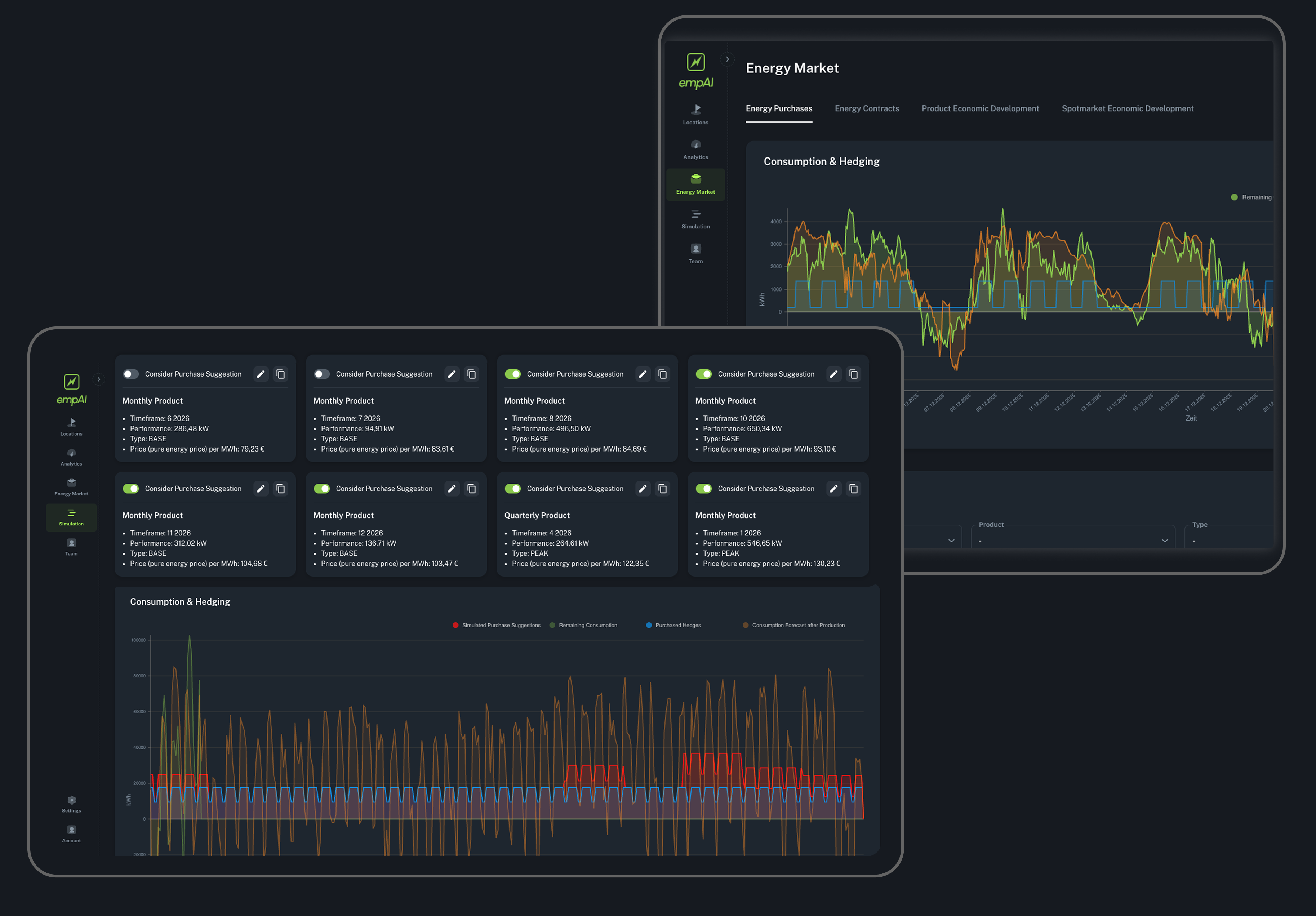
This is exactly where empAI comes in: energy, production and market data are brought together in real time and create transparency across the entire site – from the melting furnace to loading. Specifically, empAI shows
- which processes are flexible and can be aligned with favourable price windows,
- where avoidable load peaks occur,
- where real savings potential lies – often in many small levers that add up to a noticeable effect.
On this basis, energy procurement and the operation of auxiliary processes can be planned based on data, and reliable energy and CO₂ data is available for reporting and audits. Existing ERP, MES and SCADA systems are connected. Control of the plants remains with operations: empAI provides transparency and a basis for decisions; furnace operation remains untouched.
Why this matters for the industry
The glass industry supplies key intermediate products for construction, automotive and packaging and is at the same time under high cost pressure. When energy consumption becomes visible down to item and line level, unit costs can be calculated in a more differentiated way. Added to this are growing reporting obligations: the German Energy Efficiency Act (EnEfG) requires around 12,400 companies to have certified energy or environmental management systems, and the CSRD requires detailed evidence of efficiency measures. Reliable energy data forms the common basis for this – for costing, energy procurement and reporting.
Making visible what is possible beside the furnace
The melting furnace sets the pace. The data shows where there is room for manoeuvre alongside it. With empAI, consumption, load peaks and savings potential around the furnace become transparent and can be addressed in a targeted way.